top of page

Mythology Worlds
NATIVE NORTH AMERICA
First peoples of Canada and the Continental U.S.A.


For the Inuit and Alaskan Natives, see "Arctic mythology"
Long before the existence of Canada and the United States of America, hundreds of different nations thrived in North America.
They had all sorts of material culture, types of dwellings, outfits, social hierarchies, and ways to get food before restaurants and cafeterias.
Hunting and fishing were considered "men's work"; whereas women were expected to grow the vegetables, cook the food, tend the home, and care for the kids.
Damn gender norms!
They also waged war on each other, and practiced customs that seem brutal and horrifying to us today.
(just like every other human society in history)
Keep in mind
There are hundreds of different Native North American nations, each with its own traditional stories and practices. There is no "Native American mythology" any more than there is an "Asian mythology" or a "European mythology".
Even after 500 years of colonial oppression, North American Native myths and cultures live on...as do Native people themselves.
Also, this is not social justice propaganda.
The people responsible for the colonization of America are dead now.
The Great Spirit of North America
Kichi Manitou
Algonquian peoples, Northeast USA and Canada
Orenda
Hodenosaunee (Iroquois), Upstate New York
Wakan Tanka
Lakota, Northern Great Plains
Wakonda
Omaha, Nebraska
Wonomi
Maidu, California
Tirawa
Pawnee, Nebraska and Oklahoma
Sagalie Tyee
Coast Salish, Pacific Northwest
Awonawilona
Zuni, U.S. Southwest
Cautantowwit
Narragansett, Rhode Island
Native North American Origin Stories


The woman in the story is the real hero.
If there was no death, overpopulation would be even worse.


Close to the Earth


Heroes and Warriors

Historians believe that the Hodenosaunee League of Nations and their Great Law of Peace inspired the Constitution of the United States of America.

According to the Hodenosaunee themselves, before their League of Nations was founded, their ancestors used to kill each other, partake in human sacrifice, and even engage in cannibalism.
The Hiawatha story implies that this all stopped once he founded the League of Nations.
Thus, I conclude that the Hodenosaunee actually consider cannibalism wrong and uncivilized (then, now, and ever more), just like most other cultures on Earth.


The noble savage has no home here.
Warrior heroes in Native American mythology would scoff at the Rouseeauian stereotype of Indigenous people as hippies.
Journeys to the Spirit World

Kachinas are the essential spirits of the Pueblo peoples of the American Southwest.
They represent a multitude of different ancestors, most importantly rain. (which makes sense in a desert environment)
Kachina rituals include masks, dances, figurines, and even clowns.
I am not comfortable depicting Kachina spirits out of respect for the sacred traditions.
Hence, instead of a Kachina drawing, I made a text wall explaining them.


Animal Kindred
The good ol' days when animals and humans were the same


Girls in Dine (Navajo) society are expected to rub spiderwebs on their arms to make them adept at the task of weaving.


Native North American Trickster Tales


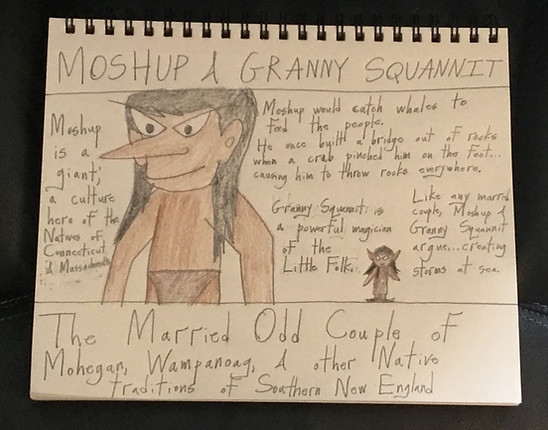
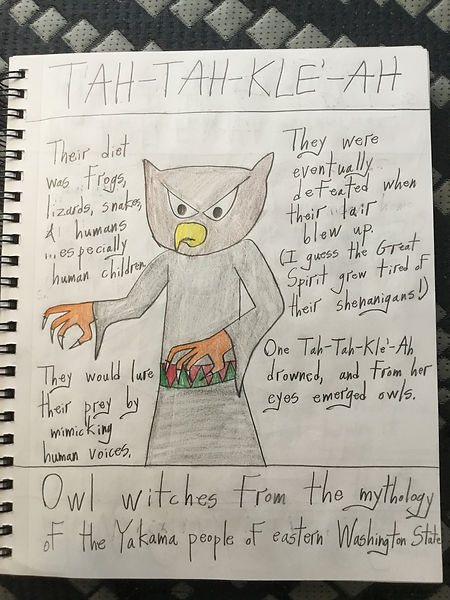
Native North American Mythical Creatures




Methinks the whole moon-eyed people war story was an ableist comment from a Cherokee chief making fun of albinos, which the European settlers took at face value.
U.S. States and Canadian Provinces with Native Names
Alabama
Alaska
Arizona
Arkansas
Connecticut
Illinois
Iowa
Kansas
Kentucky
Massachusetts
Michigan
Minnesota
Mississippi
Missouri
Nebraska
North Dakota
Ohio
Oklahoma
South Dakota
Tennessee
Texas
Utah
Wisconsin
Wyoming
Saskatchewan
Manitoba
Ontario
Quebec
Canada itself is an Iroquoian name that means "big village".
The new media image of the drunken and impoverished "Third World Injun" living in terrible conditions on a reservation and in need of government handouts has no place here.
It is just as (if not more) degrading and offensive as/than the old movie stereotypes of Native Americans as villainous raiders and subservient guides.
The turn-of-the-new-millennium image of Native Americans as hippies has no place here either.
This website condones none of these.
Speaking of reservations, I believe that the reservation system should be dismantled, and those Native American tribes who were kicked out of their original territories and sent to places such as Oklahoma (formerly known as Indian Territory) should be returned to their ancestral homelands.
Moreover, only about 20% of the Native American population of the U.S.A. lives on reservations; most of them live in much the same places as you and me.
bottom of page