Inspired By Nature: Countershading

Have you ever wondered why penguins are black and white?
They use a kind of camouflage called countershading. When a penguin is swimming, the black part blends in with the ocean depths seen from below, while the white part blends in with the surface of the water seen from above.
This is so that the penguin can avoid predators and hunt prey more easily.
Inspired by this method of animal camouflage, I have decided to represent aquatic mythical creatures with dark-colored bodies and white bellies in keeping with their underwater environment.


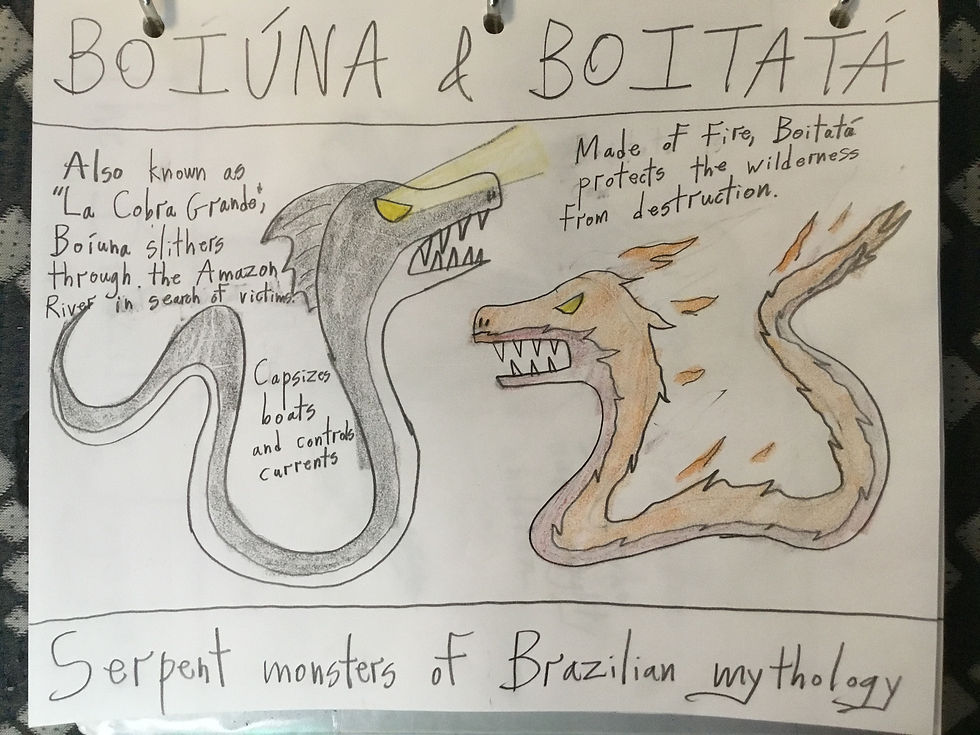
I added the Boitata in this last panel because I thought it would be a neat way to represent two mythical serpents from the same mythology...but attuned to two different elements: water and fire.
This is an example of dualistic representation of two mythical creatures of the same variety from the same folklore, but which are polar opposites in some regard.
Next time you see a penguin, take this post to heart and think about the way I portray aquatic mythical creatures here on Mythology Worlds.
The penguin will be most honored.

Comments